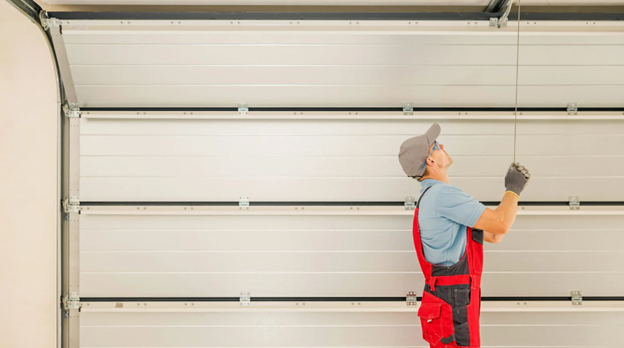
In commercial and industrial facilities, safety and operational continuity depend heavily on well-designed structural systems. Among these, overhead doors play a pivotal yet often overlooked role. From managing emergency exits to containing fire zones, these doors serve as critical components in both safety planning and workflow management. Businesses that prioritize timely servicing their overhead door in Columbus, significantly strengthen their emergency preparedness and compliance with safety standards.
Overhead Doors as Fire Safety Barriers
Overhead doors are not just access points; they function as integral safety barriers in fire control. In large facilities, fire-rated overhead doors compartmentalize spaces, preventing the rapid spread of flames, heat, and smoke. These barriers buy crucial time for evacuation and first-response efforts, protecting both personnel and assets.
Regular inspection and testing ensure that fire-rated mechanisms perform as intended during emergencies. Over time, components like seals, sensors, and closing systems can degrade due to frequent use or exposure to harsh environments. Preventive maintenance ensures these systems remain functional and responsive when needed most.
Importance of Automated Response Systems
Modern overhead doors are often integrated with automated fire detection systems. When sensors detect excessive heat or smoke, the doors automatically close to isolate the affected area. This automated response enhances the speed and reliability of fire containment, reducing the risk of cross-contamination to other operational zones.
Routine testing of sensors, power supplies, and motorized assemblies ensures that the automation functions correctly. In high-risk environments such as manufacturing plants and distribution centers, this reliability can be the determining factor between minor damage and a catastrophic event.
Strengthening Emergency Preparedness
In addition to fire safety, overhead doors contribute significantly to broader emergency planning. Their structural durability allows for rapid closure in critical situations, helping contain hazardous spills or prevent unauthorized access during emergencies.
Facility managers must evaluate the role of these doors within the overall emergency response framework. This includes ensuring that the door systems are integrated with alarms, backup power sources, and security controls. Understanding how commercial overhead doors enhance facility security and operational efficiency provides valuable insight into designing systems that balance both safety and workflow.
Preventive Maintenance for Consistent Reliability
Regular servicing of overhead doors ensures that they function seamlessly when emergencies arise. Inspections typically include checks on tension springs, cables, motor function, and control panels. Maintenance teams also verify that manual override systems are fully operational in case of power failure.
Neglecting maintenance can compromise both safety and performance. A malfunctioning overhead door could fail to close completely during a fire event or obstruct evacuation routes, two scenarios that can lead to severe consequences. Consistent mechanical inspections eliminate these risks and ensure compliance with fire safety codes and building regulations.
Long-Term Benefits Beyond Safety
Beyond their protective role, overhead doors also improve daily efficiency and cost management. Smooth operation enhances workflow in high-traffic areas, while proper sealing reduces heat loss and energy consumption, key considerations for large commercial facilities.
For businesses in Columbus, maintaining overhead door systems is not merely a precautionary measure but a strategic investment in reliability, safety, and sustainability. By ensuring these mechanisms are well-maintained, organizations reinforce their operational resilience and meet stringent safety standards.
Conclusion
Overhead doors are far more than functional barriers; they are integral safety assets that protect people, property, and productivity. When maintained regularly, they provide essential fire resistance, enable smooth emergency responses, and optimize building efficiency.
For businesses seeking long-term resilience, investing in professional inspections and maintenance ensures that overhead doors perform flawlessly in both everyday operations and high-stakes emergencies. In the broader scope of safety management, this attention to mechanical integrity is a hallmark of true operational preparedness.